

You can be in the room and still be somewhere else entirely.
Thinking about the meeting you just left. Planning what you’re going to say next. Glancing at the notification that popped up on your phone. Half-listening while your brain works through the rest of your to-do list.
We’ve all done it.
But people can feel the difference between having your attention and having your presence.
That’s why the first B in my BOND Framework is Be Present.
Being present doesn’t mean you need to have the perfect response. It doesn’t mean you have to solve every problem someone brings to you. Sometimes the most valuable thing you can give another person is simply your full attention.
I learned this on the football field.
When I was in the huddle, I couldn’t be thinking about the play that went wrong two minutes ago or worrying about what might happen in the fourth quarter. My teammates needed me locked into this play, this moment, right now.
Leadership works the same way.
When someone comes to you with an idea, a concern, or a question, are you actually with them? Or are you already thinking about what comes next?
Put the phone down. Close the laptop when you can. Make eye contact. Listen long enough to understand instead of listening long enough to respond.
Presence sends a message before you ever say a word:
You matter enough for me to be here.
And sometimes, that’s where trust begins.
3 Tips from 36
Mental performance for leaders, from a former running back who knows a little something about pressure.

1. Call a timeout before you call someone out.
When frustration hits, pause before responding. Take a breath, release the tension in your shoulders, and ask: “What does this moment need from me?”
A short reset can help you choose words you’ll still stand behind tomorrow.
2. Check the game tape, not just the story in your head.
“They missed the deadline” is a fact. “They don’t care” is an assumption.
Before reacting, separate what you know from what you’re guessing. Then ask a question: “What got in the way?”
Lead with curiosity before drawing conclusions.
3. Focus on the next play.
A rough meeting doesn’t have to become a rough day.
Ask: “What’s one useful action I can take now?”
Clarify the expectation, repair the conversation, or adjust the plan. Put your energy into the next move you can control.
Your leadership rep for this month: Before your next difficult conversation, pause, check the facts, and choose your next play.
The Reset You Might Need
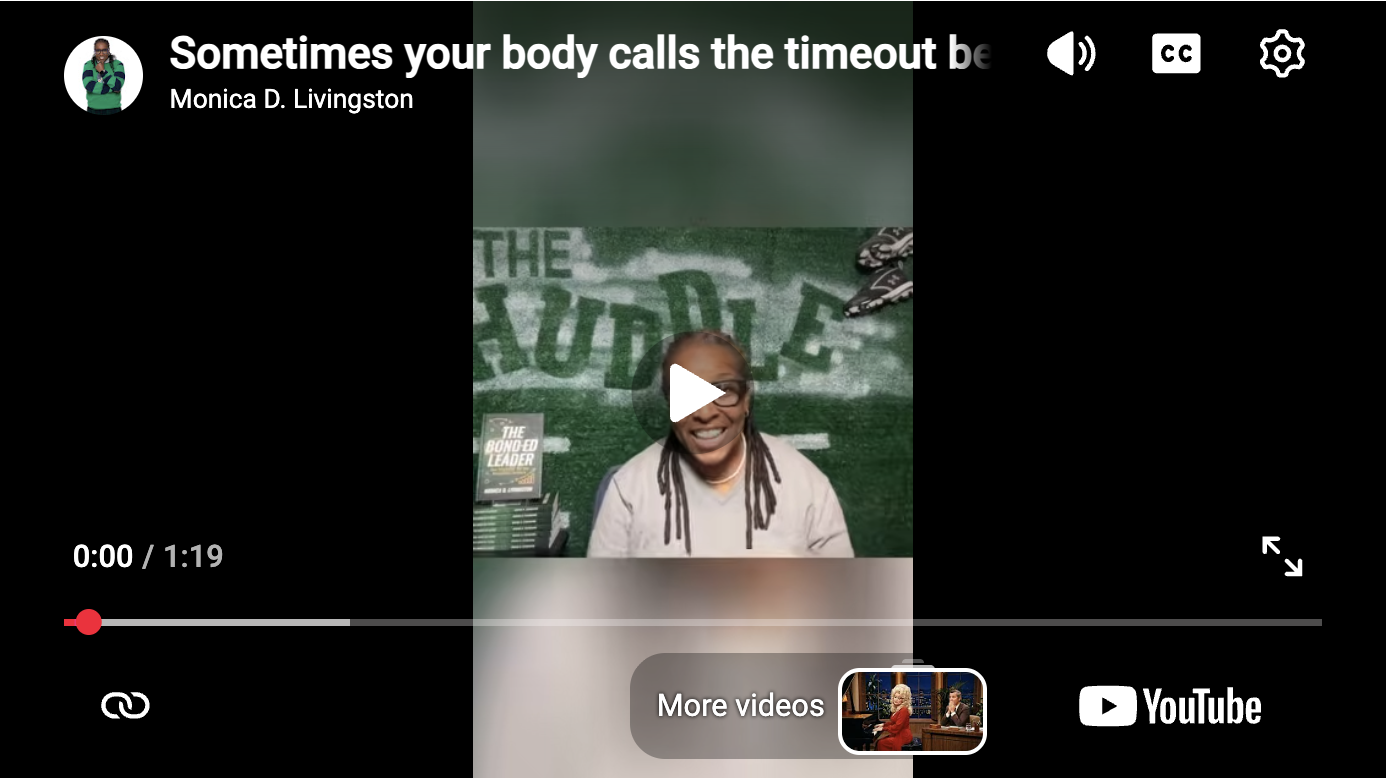
Sometimes pushing harder isn’t the answer. In this video, I’m talking about why calling a strategic timeout can give you the space to breathe, regroup, and get back in the game with clarity.
▶ Click the here or the video above to watch and take your timeout.
Take BOND-ED Beyond the Brief
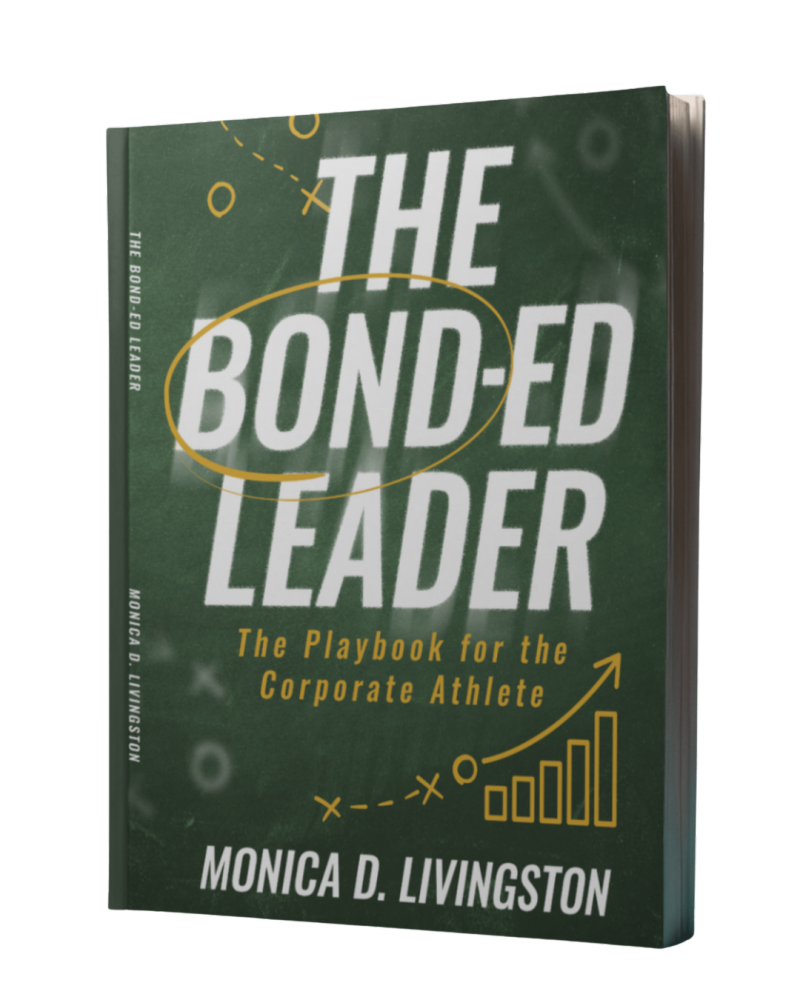
Want to go deeper? The BOND-ED Leader: The Playbook for the Corporate Athlete takes the ideas we explore here and puts them into a practical playbook for leading with greater presence, trust, and connection.
Whether you’re leading a team, coaching others, or working on how you show up as a leader, consider this your invitation to get BOND-ED.
→ Get your copy of The BOND-ED Leader on Amazon: https://a.co/d/02cn8E2S
One for the Huddle 😄
Why did the leader bring a ladder to work?
Because everyone kept telling them to take it to the next level. 🪜😂
That’s the brief for this month.
Now take it off the screen and into the room. Be present. Make the connection. Build the BOND.
Until next time,
Monica D. Livingston
The Culture Coach
